
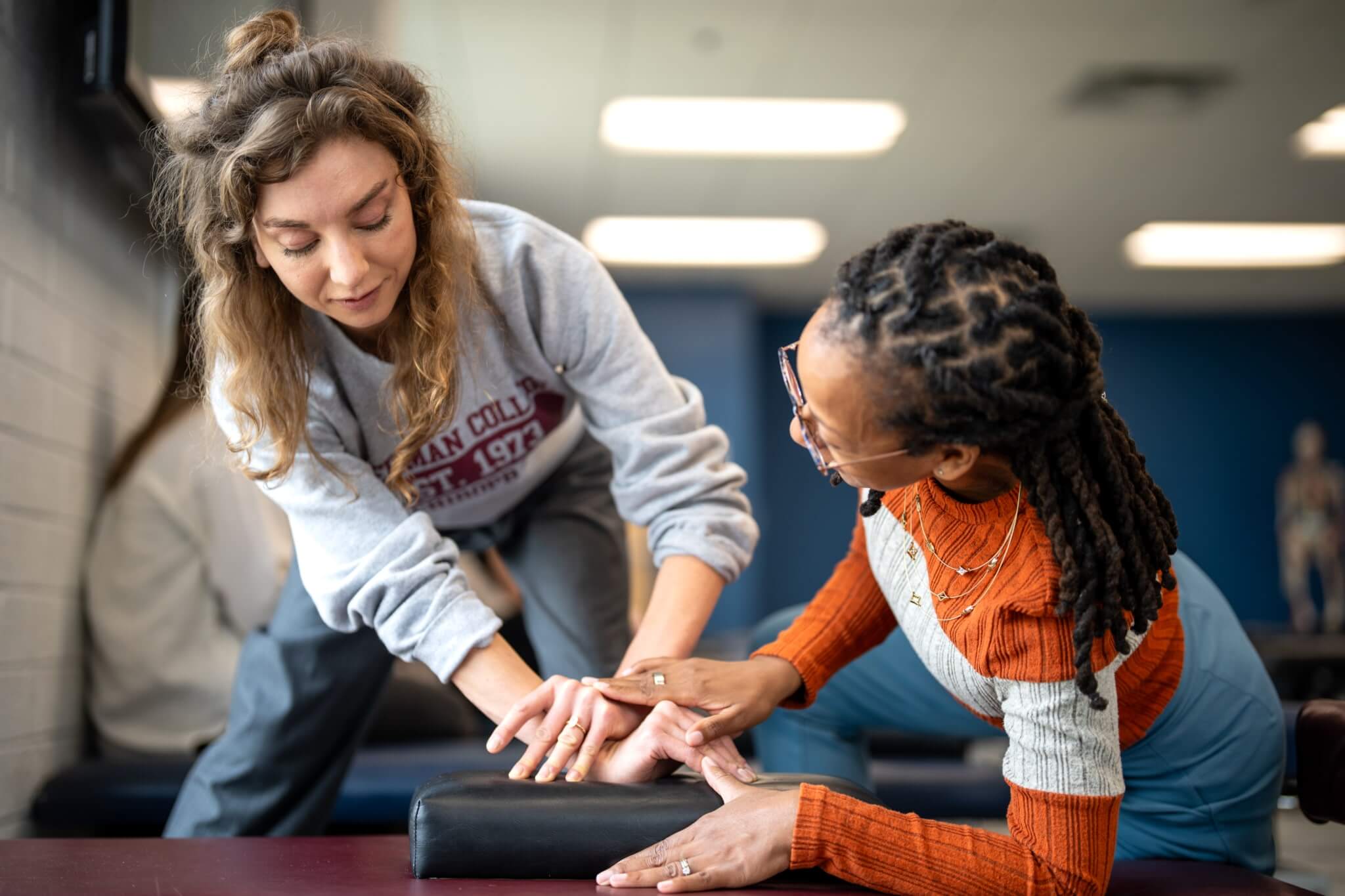
Physical Therapy vs. Chiropractic: Two Healing Professions, One Crucial Difference
If you’re passionate about helping people move better, heal naturally, and live active lives, you’ve probably thought about a career in physical therapy or chiropractic care. Both fields are based on a strong respect for the body’s ability to heal, the power of movement, and the importance of structure and function. Although these paths may seem similar at first, they differ significantly in philosophy, focus, and impact—especially regarding the spine and nervous system.
At Sherman College of Chiropractic, we believe in honoring the unique role chiropractors play in health care, not by diminishing other professions, but by staying rooted in our purpose: to locate, analyze, and correct vertebral subluxations so the body can heal and perform as it was designed.
A Shared Language of Movement and Healing
It’s true: chiropractors and physical therapists often speak the same language when it comes to movement. Both understand that motion is life, that form follows function, and that restoring proper biomechanics aids the body in healing.
Over the years, the scope of practice for both professions has expanded. Chiropractors may now offer a variety of supportive modalities, like:
- Acupuncture
- Dry needling
- Cupping
- Cold laser therapy
- Soft tissue work
- Postural rehabilitation
- Lifestyle coaching
Likewise, physical therapists have increasingly adopted techniques like spinal mobilization and high-velocity manipulations, which are traditionally associated with chiropractic.
To an outsider, it might seem that the two professions are merging.
But there’s a crucial difference that can’t be overlooked.
The Power of the Adjustment: Beyond Biomechanics
Physical therapists are highly skilled at assessing and correcting movement. They’re trained to enhance strength, mobility, and function through exercises, stretching, and soft tissue techniques. Their approach is mainly biomechanical and rehabilitative, working from the outside in to restore proper movement patterns.
Chiropractors, on the other hand, begin from a very different place.
We work from the inside out, focusing on the nervous system, which is the body’s control center. Chiropractic is based on the understanding that interference with the nervous system, especially from vertebral subluxations, diminishes the body’s ability to function, heal, and perform.
The chiropractic adjustment is more than just joint mobilization. It is a targeted, deliberate correction meant to improve communication between the brain and the body. When vertebral subluxation is fixed, the whole body’s physiology can change, from muscle tone and posture to digestion, stress response, and athletic performance.
Physical therapy may help restore motion.
Chiropractic helps restore life.
What Makes Sherman Different?
At Sherman College, we don’t try to be everything. We focus on the spine, the nervous system, and the adjustment. We train students to become among the best adjusters in the world at the location, analysis, and correction of vertebral subluxation (LACVS).
You won’t graduate with a haphazard set of tools and a fuzzy understanding of what chiropractic truly is. Instead, you’ll leave with a clear focus and practical skills to make a difference, starting with the nervous system.
And if you’re interested in exploring additional modalities? Great. These techniques are often quick to learn and simple to incorporate after graduation. But at Sherman, our focus is on ensuring that you master the one skill uniquely suited to chiropractors: adjusting the spine to eliminate nerve interference and restore function.
The Chiropractor’s Role in Human Performance
Whether you’re working with elite athletes, children, seniors, or families, the nervous system is the common thread that links all aspects of human health and performance.
By focusing on subluxation correction, chiropractors help improve:
- Coordination and balance
- Reaction time
- Stress adaptation
- Mental clarity
- Healing capacity
- Overall quality of life
Chiropractic isn’t just about fixing what’s broken. It’s about unlocking what’s already functioning inside the body, so it can reach its full potential.
Interested in becoming more than just a movement expert?
If you’re choosing between physical therapy and chiropractic care, ask yourself: Do I want to focus on treating symptoms through rehabilitation, or aim to eliminate the interference to life overall?
Click here to explore Sherman College and see how we can help you become a principled chiropractor who changes lives—starting from the inside out.