
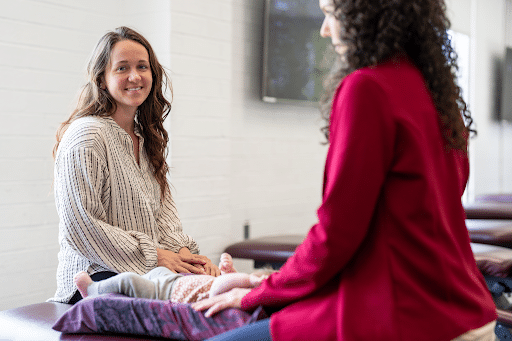
Pediatric Chiropractic Clinical Experience at Sherman College
Learning to care for families requires more than classroom instruction. Students also need opportunities to communicate with parents, work with children, apply clinical judgment, and build confidence in a supervised setting.
At Sherman College, interns who are interested in pediatric, prenatal, and perinatal care can pursue a focused experience in the on-campus Chiropractic Center. Under the guidance of faculty case doctors, they learn how to recruit, communicate with, analyze, and adjust a diverse range of patients, including pregnant women, postpartum mothers, infants, and children.
For prospective students, this is where education becomes practice. Sherman gives interns the opportunity to develop both the clinical and professional skills needed to build a family-centered practice after graduation.
What Is Sherman’s Pediatric and Perinatal Clinical Focus?
Interns who want additional experience with pediatric, prenatal, and perinatal patients can pursue a focused path within the Chiropractic Center.
This area is led by Sarah Hock, D.C., C.A.C.C.P, Chair of Pediatrics and Perinatal Care, with support from faculty case doctors. Interns apply classroom knowledge in a supervised environment while learning how to serve families through different stages of pregnancy, birth, infancy, and childhood.
Their experience may include working with:
- Pregnant women
- Postpartum mothers
- Infants
- Toddlers
- School-age children
- Parents and caregivers
The goal is not simply to increase the number of pediatric visits an intern sees. It is to help students understand the complete process of building trust, delivering care, and managing relationships within a family practice.
What Do Interns Learn Through This Experience?
The pediatric and perinatal clinical focus gives interns experience with the full range of responsibilities involved in serving families.
They learn how to connect with parents in the community, introduce families to the Chiropractic Center, and explain chiropractic care in language that is clear and appropriate for each audience. They also learn how to involve children in conversations about their care rather than speaking only to the adults in the room.
Under faculty supervision, interns develop the ability to:
- Build trust with parents and caregivers
- Communicate with children at different ages
- Adapt patient education to each stage of development
- Analyze prenatal, perinatal, infant, and pediatric patients
- Adjust positioning, contacts, and force for each patient
- Manage cases and complete professional documentation
- Help families understand their care recommendations
- Participate in outreach that introduces more families to the Chiropractic Center
These are practical skills that students will use every day in practice. The focused clinical experience helps interns become stronger communicators, more confident chiropractors, and better prepared practice owners.
Why Is Communication So Important in Family Chiropractic?
Family care often involves more than one person in the conversation.
An intern may need to explain an examination to a parent while helping a child feel included and comfortable. A pregnant patient may have questions about positioning or care during different stages of pregnancy. Parents of an infant may need clear explanations about what the intern is doing and why.
Good communication builds trust. It also helps families feel informed and involved in their care.
Through supervised patient interactions, interns learn how to answer questions, explain chiropractic without unnecessary jargon, and adjust their communication style for parents, children, and caregivers.
How Do Interns Learn to Work with Different Patient Populations?
Pregnant women, infants, and children cannot be approached in the same way.
Each group presents different considerations related to size, development, movement, comfort, positioning, and communication. Interns learn how to recognize those differences and adapt their approach accordingly.
A prenatal patient may need modified positioning. An infant adjustment requires a different level of force and observation compared to an older child. A young child may need extra time to become comfortable before care begins.
The Chiropractic Center gives interns the opportunity to develop these skills under the direction of experienced faculty case doctors. That supervision allows students to ask questions, receive feedback, and improve with each patient encounter.
How Active Is Pediatric and Perinatal Care in the Chiropractic Center?
Pediatric and perinatal care is an established part of how Sherman’s Chiropractic Center serves the public.
More than 82% of Sherman interns see a pediatric or perinatal patient during their clinical experience. Pediatric and perinatal visits increased by 22% from 2024 to 2025, while new patients increased by 9%. During the comparable period from 2025 to 2026, visits increased by 28% and new patients increased by 36%.
These numbers reflect growing interest among local families and expanding opportunities for interns to gain experience.
For a prospective student, that means pediatric and perinatal care is not limited to lectures or occasional observation. It is part of the clinical experience available at Sherman.
How do Interns Learn to Recruit and Build a Family Practice?
A successful family practice depends on strong community relationships.
Interns need to know how to introduce chiropractic to parents, create trust, and help families understand what the practice offers. Sherman’s community events give students the opportunity to develop those skills in a real setting.
Events such as EGGSTRAVAGANZA, Kids Day America, and Trunk or Treat welcome local parents and children to campus. More than 600 guests attended a recent Trunk or Treat, demonstrating the reach these events can have within the Spartanburg community.
Sherman also connects with families through baby showers, school talks, educational outreach, and relationships with organizations and professionals such as BirthMatters, nurse practitioners, and lactation consultants.
By participating in these efforts, interns learn how to:
- Start conversations with parents
- Explain the role of chiropractic care
- Invite families to learn more about the Chiropractic Center
- Build professional relationships in the community
- Create outreach strategies they can use in future practice
This experience helps students understand that practice growth begins with service, communication, and trust.
Why Does Supervised Clinical Experience Matter?
Students need a place to develop before they practice independently.
Faculty case doctors guide interns through patient care, communication, case management, documentation, and adjusting procedures. Interns receive feedback while they are still learning, giving them the opportunity to refine their approach before graduation.
For students interested in family care, this guidance is especially valuable. The needs of pregnant women, infants, and children can vary widely, and each patient deserves an individualized approach.
Supervision helps interns build sound habits, stronger judgment, and greater confidence.
Why Choose Sherman for Pediatric and Perinatal Clinical Experience?
Students who want to build a family-centered practice need more than exposure to pediatric and perinatal topics. They need repeated opportunities to work with families, communicate with parents, develop adjusting skills, and understand how a practice grows.
Sherman provides that experience.
Interns can develop clinical skills in the Chiropractic Center, learn from faculty case doctors, work with a diverse patient population, and participate in outreach that connects the college with local families.
By graduation, students who pursue this focus have had opportunities to develop the skills that matter most in practice:
- Recruiting and community engagement
- Parent and child communication
- Pediatric, prenatal, and perinatal analysis
- Age-appropriate adjusting
- Case management
- Family relationship building
That combination of clinical preparation and practice development gives students a stronger start as they enter the profession.
Preparing for a Family-Centered Practice
Some students arrive at Sherman knowing they want to care for pregnant women and children. Others discover that interest after working with families in the Chiropractic Center.
Both paths can lead to a focused clinical experience.
Sherman gives interns the opportunity to learn how to attract families, communicate with them, care for them, and build relationships that may continue for years. For students who see family chiropractic as part of their future, this experience can become an important part of their preparation.
Take the Next Step
Learn more about Sherman College and connect with our Admissions team.
Interested in receiving chiropractic care on campus? Learn more about becoming a patient at the Sherman College Chiropractic Center.
Frequently Asked Questions
What is a pediatric chiropractic clinical experience?
A pediatric chiropractic clinical experience gives interns supervised opportunities to work with infants and children while developing communication, analysis, adjusting, and case management skills.
Can Sherman interns focus on pediatric and perinatal care?
Yes. Interns with an interest in pediatric, prenatal, and perinatal chiropractic can pursue a focused experience within the Chiropractic Center.
Who leads the pediatric and perinatal clinical focus?
The focus is led by Sarah Hock, D.C., C.A.C.C.P., Chair of Pediatrics and Perinatal Care, with support from faculty case doctors.
What types of patients may interns work with?
Interns may gain experience with pregnant women, postpartum mothers, infants, toddlers, children, parents, and caregivers.
Do interns learn how to communicate with parents and children?
Yes. Interns learn how to explain care to parents, include children in age-appropriate conversations, and create a positive experience for the family.
Do interns learn how to recruit patients?
Yes. Through community outreach and family-focused events, interns gain experience starting conversations, introducing families to the Chiropractic Center, and building relationships that can support a future practice.
How many interns see pediatric or perinatal patients?
More than 82% of Sherman interns see a pediatric or perinatal patient during their clinical experience.
Is care in the Chiropractic Center supervised?
Yes. Student interns provide chiropractic care under the guidance of licensed faculty case doctors.
Does Sherman host events for local families?
Yes. Sherman hosts events such as EGGSTRAVAGANZA, Kids Day America, Trunk or Treat, baby showers, and other forms of community outreach.